Drive Kingston Pike through Bearden at the posted speed and the neighborhood reads as ordinary: strip centers, billboards, a dentist's office that used to be somebody's midcentury dream commission. Knoxville historian Jack Neely, writing for the Knoxville History Project, once described the effect from behind the wheel: "at 45 mph, the suggested speed on Kingston Pike, Bearden can look almost ordinary." Slow down, and the neighborhood underneath the commercial corridor starts to show its age in a different way than the storefronts do. It shows up on a slab, in a crawlspace, and in a sewer line that was clay before most current owners were born.
That distinction matters more than it sounds like it should, because Bearden's inspection reports follow a pattern tied less to how well a house was kept and more to when it was built. Buyers who understand that pattern walk into due diligence with real leverage. Sellers who understand it first walk into listing day with fewer surprises.
An Annexation Year, Not Just an Address
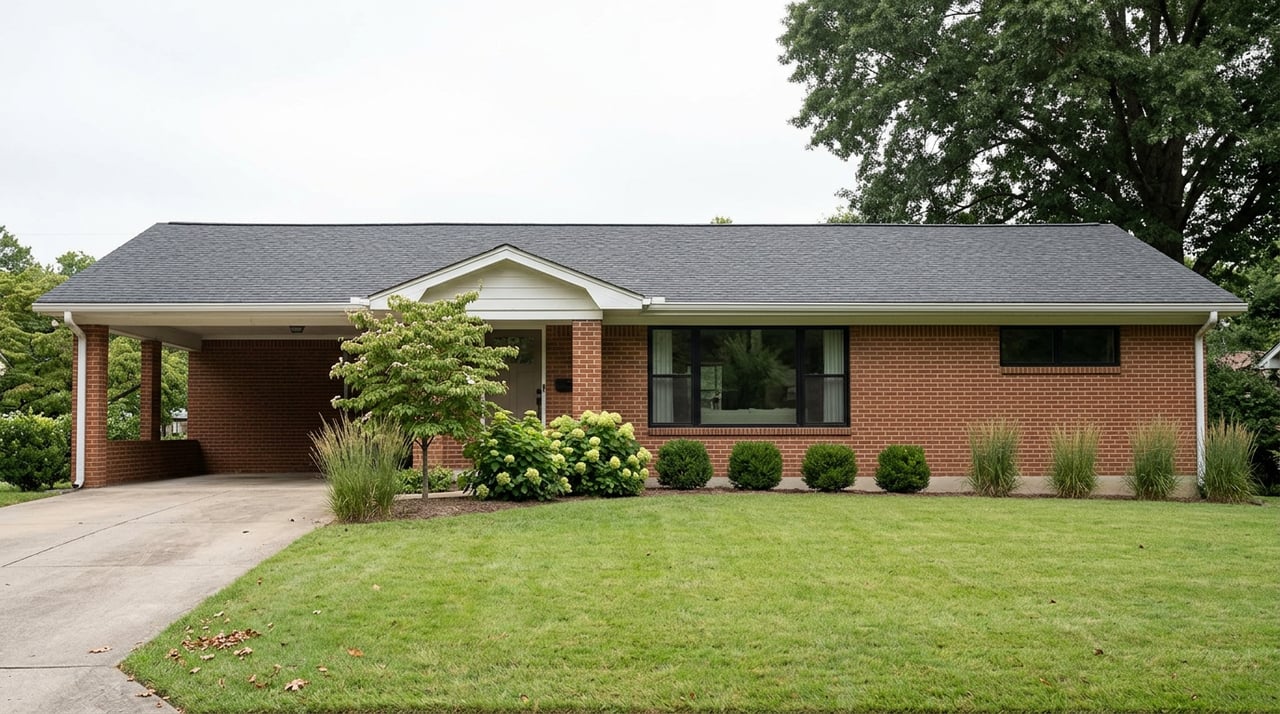
Bearden was annexed by the City of Knoxville in 1962, decades after its start as a farming crossroads along Kingston Road. The interstate construction and the retail boom that followed, including Western Plaza in 1957 and West Town Mall in the early 1970s, pulled the neighborhood's commercial center west and its housing stock in behind it. West High School went up in 1951 to serve the growing population. The homes filling in around Kingston Pike through that stretch were, overwhelmingly, mid-century ranches and brick construction going up on slab foundations.
That construction era is the whole story. A 1950s ranch on a slab, plumbed with the galvanized steel or early copper standard of the day, is not a home with a maintenance problem. It is a home running systems that were never designed to last past their fortieth or fiftieth year, sitting in a neighborhood where a large share of the housing stock hit that mark a while ago.
What Actually Shows Up on the Report
Local trade professionals who work Bearden alongside Sequoyah Hills, West Hills, and the older sections of Farragut describe a consistent set of findings tied to that mid-century build era:
- Original galvanized or early copper supply lines still in service, prone to corrosion, mineral scale, and the kind of slow pinhole leak that goes unnoticed until a water bill jumps
- HVAC systems installed well past their expected service life, with insulation levels that no longer meet current standards
- Clay or cast-iron sewer laterals, common in Bearden's older sections, that are susceptible to root intrusion and slow deterioration
- Foundation and slab conditions consistent with decades of East Tennessee's freeze-thaw cycles and clay-heavy soil
One inspection outfit serving the wider Knoxville market notes plainly that mid-century homes in Bearden, West Hills, and the older Kingston Pike corridor often carry HVAC systems well past their expected service life and insulation that no longer meets modern standards. A separate inspection company that works Bearden alongside Sequoyah Hills and Island Home points out the same pattern on the plumbing side, noting that older homes in those neighborhoods often have clay or cast-iron sewer lines prone to root intrusion and deterioration.
None of this means a Bearden home is a bad buy. It means the inspection conversation in Bearden is different from the one buyers have in Farragut's newer subdivisions, and different again from what shows up in Sequoyah Hills.
The Same Neighborhood, Three Different Diagnostic Orders
Local leak-detection technicians describe choosing their first diagnostic tool based on the housing era they're standing in, not a generic checklist. The pattern breaks down roughly like this:
| Neighborhood era | Typical construction | First failure signature | First diagnostic tool |
|---|---|---|---|
| Old North Knoxville / Fourth & Gill, 1880s to 1910s | Galvanized supply, plaster walls | Rust-tinted hot water, low upstairs pressure | Acoustic detection |
| Bearden, 1950s ranch on slab | Copper or galvanized supply on slab | Warm spot on the slab near a hot-water line, baseboard lifting on an exterior wall | Thermal imaging (FLIR) |
| Farragut / Hardin Valley, 1990s and newer | PEX manifold systems | Ceiling halo under an upstairs bathroom, pinhole drip at a tankless unit | Pressure isolation |
The Bearden-specific detail is worth sitting with. A warm patch on the slab floor near a kitchen island, paired with a hairline crack tracking a hot-water line and baseboard lifting along an exterior wall, is the signature local technicians associate with a 1950s ranch on slab, not with a Sequoyah Hills Tudor or a Hardin Valley subdivision home. It is a symptom of the era's plumbing method, copper or galvanized supply lines run directly through the slab, not a symptom of neglect.
What the Repair Actually Costs
When a slab leak in a Bearden home gets confirmed, local plumbers pricing that specific repair type put a spot repair on 1950s-era copper running through a slab at roughly $1,750 to $3,400, separate from the detection fee itself. That is a real number a buyer or seller can plan around, and it is meaningfully different from repair costs in other Knoxville-area housing eras, where a PEX manifold barb replacement in a 1990s Farragut or Hardin Valley home runs closer to $295 to $625.
Insurance timing matters here too. Most Tennessee homeowners policies cover the detection fee and the tear-out access when the underlying loss reads as sudden and accidental, a pinhole that ruptured rather than a slow seep an owner has watched for years. Repair of the failed pipe itself is typically excluded as wear and tear, though water-damage cleanup downstream is usually covered. That distinction is exactly why catching a slow slab leak during a pre-listing inspection, rather than after it becomes an emergency claim, changes who pays for what.
Why the Timing of Discovery Now Matters More
Knoxville's market has shifted enough in 2026 that this timing question carries real weight. Over the three months ending in June 2026, the median sale price across Knoxville sat around $325,000, up modestly from the year before, with homes taking an average of 52 days to sell compared with 48 days the prior year. Mortgage rates were still sitting near 6.43% as of the first week of July 2026, keeping buyers cautious and more attentive to condition than they might have been two years ago.
The more telling number is the split between homes closing above and below asking price. As of the end of May 2026, a majority of tracked Knoxville sales closed below list price rather than above it. That is a meaningfully different environment than the multiple-offer frenzy of a few years ago, and it means a buyer who finds a warm spot on a Bearden slab during inspection now has real room to ask for a credit or a price adjustment, where a seller in a hotter market might have been able to hold firm.
For a Bearden seller, that shift argues for getting ahead of the finding rather than negotiating from behind it. A pre-listing inspection that identifies the slab condition, the sewer lateral material, and the HVAC system's remaining service life lets a seller price the home with that information already built in, rather than handing a buyer's inspector the first look and the first move.
Quoted median values for Bearden itself vary depending on how tightly a source draws the neighborhood boundary, with figures for the broader 37919 area landing anywhere from the mid-$300,000s to well above $500,000 depending on whether the sample includes Bearden's larger character homes and estate-scale properties along with its smaller mid-century ranches. That spread is itself a reminder that a Bearden address covers a wide range of building types, ages, and systems, which is exactly why the inspection conversation has to be specific to the individual house rather than the zip code.
Frequently Asked Questions
Does a Bearden home need a sewer scope in addition to a standard inspection? Given how often clay and cast-iron laterals show up in Bearden's older sections, a camera inspection of the main sewer line is a reasonable add-on rather than a standard inspection item, since a general home inspection does not typically include it.
Should a seller repipe before listing, or leave it for the buyer to negotiate? That depends on how close the existing supply lines are to failure. A home already showing repeated small leaks on the same section of galvanized or old copper is a candidate for repiping before listing, since a documented, professionally completed repipe removes the issue from negotiation entirely rather than leaving it as a credit request.
Is an aging HVAC system in a Bearden home automatically a red flag? Not automatically. It signals that the system is a maintenance and replacement-timeline conversation buyers should have upfront, since these systems in mid-century Bearden homes are commonly past their original expected service life even when they are still functioning.
If you are weighing a Bearden purchase or getting a mid-century home ready to list, the specifics above are exactly the kind of detail that belongs in a pricing and preparation strategy from day one. Karli Pritchard Realtors works Bearden alongside the rest of West Knoxville and can walk you through what a pre-listing inspection or a buyer's due diligence period is likely to turn up in your specific block. Schedule a personalized market consultation to talk through your home's systems, its age, and what that means for your number before you go under contract.
This article is general information, not legal, tax or financial advice. Consult a qualified professional about your situation.