Farragut Is a School District—But That’s Not Why People Stay
Every August, before the first bell rings, traffic on Kingston Pike begins moving according to the school calendar again.
Cars turn toward Farragut Primary, Intermediate, Middle, and High schools. Practices restart. Stadium lights come on. Restaurants fill earlier on game nights, and entire weeks begin arranging themselves around pickup lines, rehearsals, tournaments, and Friday night football.
Technically, Farragut does not operate its own independent school district. Its public schools are part of Knox County Schools. But in real estate conversations, “Farragut schools” functions almost like a location of its own.
It is one of the first things many buyers ask about and one of the main reasons they initially focus their search here.
But it does not fully explain why people remain in Farragut after their children graduate, why longtime residents often downsize within the same few miles, or why people who grew up here eventually begin looking for a way back.
The schools may start the search. The ease of everyday life is what makes leaving difficult.
The School Zone Is Smaller Than the Farragut Name
The first complication is that Farragut can mean several different things.
It can describe the incorporated Town of Farragut, the 37934 ZIP code, the larger area locals casually call Farragut, or a property assigned to Farragut schools. Those boundaries overlap, but they are not identical.
A home with a Knoxville mailing address may be zoned for Farragut schools. Another home advertised as being in the Farragut area may fall outside the official town limits or have a different school assignment.
That is why buyers should verify zoning for the individual property instead of relying on its ZIP code, mailing address, or listing description.
Once that question is settled, however, the more useful one is what happens during the rest of the day.
A school assignment affects a portion of life for a portion of the years someone may own a home. The roads, parks, stores, restaurants, and routines around that home affect almost every day of ownership.
The Grocery Run Explains More Than the Brochure Does
Farragut’s convenience is not dramatic enough to appear in listing photographs.
It shows up when someone realizes they can leave home, stop at the grocery store, pick up a prescription, return something at Target, go through the car wash, and bring home dinner without spending the entire afternoon driving across Knoxville.
Publix, Kroger, The Fresh Market, Costco, and the businesses throughout Turkey Creek give residents several versions of the same basic errand. Kingston Pike and Parkside Drive provide everything from medical offices and fitness studios to coffee shops, restaurants, and everyday services.
Turkey Creek is a regional shopping destination for people driving in from other parts of East Tennessee. For many Farragut residents, it is simply where Tuesday’s errands happen.
That difference matters.
Living near shopping is not only about having more stores. It is about how many hours of the week are lost moving between the places someone has to go. A ten-minute grocery run rarely appears on a buyer’s wish list, but it becomes one of the most frequently used amenities they purchase.
The same is true of interstate access. Farragut sits along the I-40 and I-75 corridor, placing West Knoxville, downtown, Oak Ridge, Lenoir City, and McGhee Tyson Airport within a manageable drive.
The town is suburban, but it does not require residents to leave the area for every appointment, meal, or activity. That creates a daily life that feels smaller and easier than the Knoxville map initially suggests.
The Greenways Create a Second Map of Farragut
The roads show how cars move through Farragut. The greenways show how residents use it.
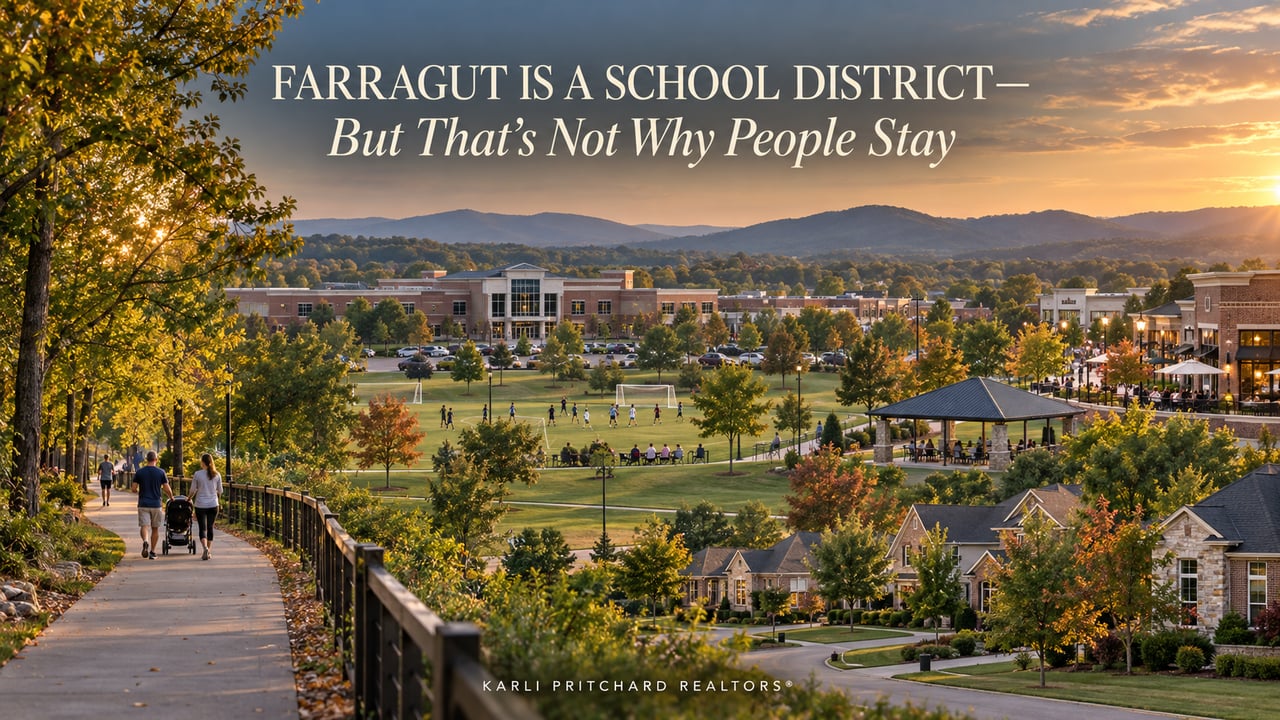
More than 20 miles of connected trails run through parks, wooded areas, commercial sections, and residential neighborhoods. Some portions feel like recreational paths. Others function as practical connections between places that would otherwise require a drive.
A neighborhood entrance on Kingston Pike may look completely car-dependent from the road while a greenway runs quietly behind the homes. A resident can leave the subdivision on foot, reach a park, extend a morning run, or give children somewhere to ride bikes without circling the same cul-de-sac.
That connection often matters more than buyers expect.
A neighborhood pool is an obvious amenity during a showing. A greenway is less noticeable, especially if the entrance sits at the back of the community. But the pool may be open for only part of the year. The trail can be used on a mild day in January, a spring morning, or an ordinary Tuesday evening in October.
It does not create a special occasion. It improves the routine.
The Parks Work on Days When Nothing Is Scheduled
Farragut’s parks are busiest during tournaments, festivals, and summer weekends, but their real value is easier to see when the calendar is empty.
Mayor Bob Leonard Park is known for its athletic fields, yet organized sports are only one part of what happens there. People walk dogs, use the playground, run the trails, and meet friends while practices unfold in the background.
McFee Park serves another section of town with athletic fields, walking paths, playgrounds, and a splash pad that becomes a regular summer stop. Founders Park at Campbell Station offers a quieter setting with trails, open lawn, wooded areas, and a creek. Anchor Park adds lake access, fishing, playground space, and courts to the mix.
Together, the parks support several versions of outdoor life.
There is space for the family headed to a tournament with a trunk full of equipment, the person walking alone after work, the parent pushing a stroller, and the retiree following the same route every morning.
The best measure of a park system is not how impressive it looks during its largest event. It is whether people use it when nothing particular is happening.
In Farragut, they do.
Youth Sports Turn the Town Into a Weekly Circuit
Youth sports are another part of Farragut that outsiders may see only on tournament weekends.
Residents experience them as a weekly circuit connecting schools, parks, restaurants, and neighborhoods. Soccer practices at Mayor Bob Leonard Park, baseball games, swim meets, school athletics, dance classes, and other activities create a predictable rhythm throughout the year.
That rhythm affects the housing market in ways that are difficult to quantify.
A neighborhood’s value is not only its distance from a workplace. It may be the ability to reach practice without getting on the interstate, return home between games, or pick up dinner without driving twenty minutes in the opposite direction.
For households whose calendars revolve around several activities, the difference between a seven-minute drive and a twenty-five-minute drive is repeated several times a week.
Even after those schedules end, the familiarity remains. The same fields become walking routes. The same restaurants become meeting places. The roads once used for school pickup continue leading to doctors, friends, church, and errands.
The activity changes. The network stays useful.
The Events Use Places Residents Already Know
Farragut’s community calendar does not depend on one enormous festival to create a sense of place.
Events rotate through the parks and public spaces residents already use. Seasonal celebrations, outdoor movies, art events, live music, the Farragut Fall Trail, Freaky Friday Fright Nite, and holiday programming at Founders Park and Campbell Station help mark the year without requiring the town to reinvent itself for visitors.
Light the Park is probably the clearest example.
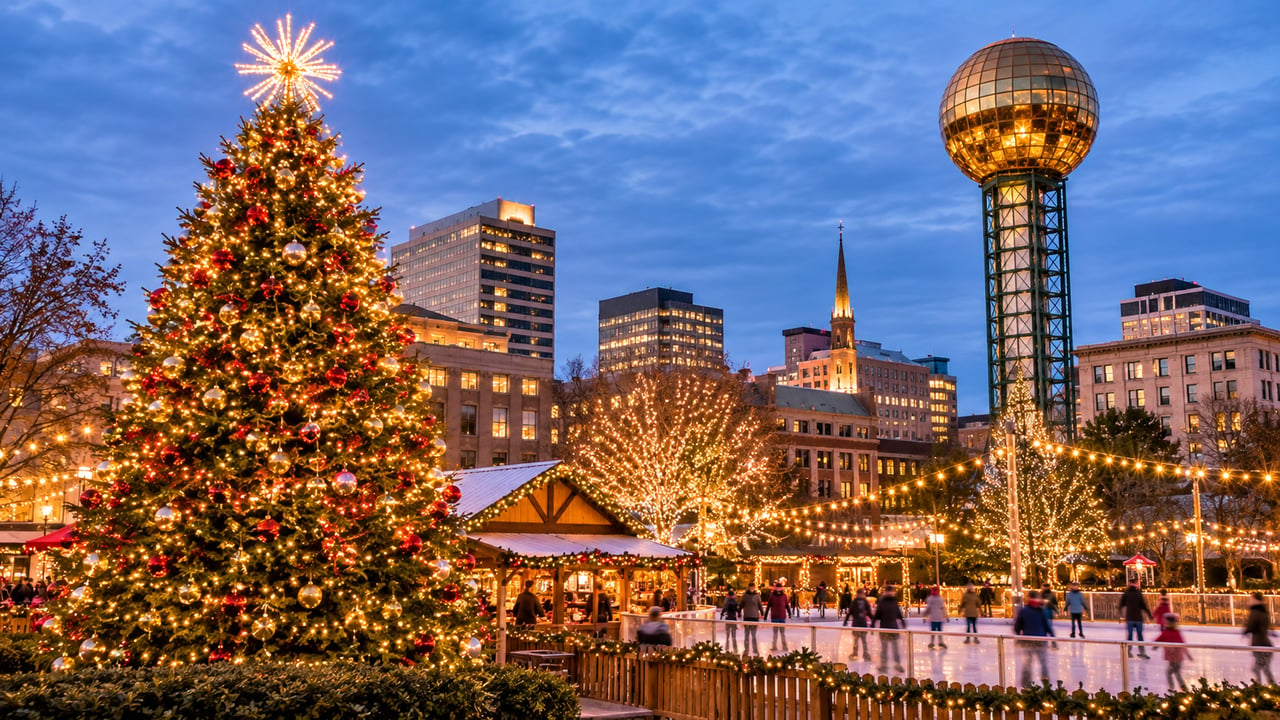
For several weeks during the holiday season, the Campbell Station area becomes brighter, busier, and more festive. But people are not discovering an unfamiliar attraction built for December. They are returning to the same park, trails, and roads they use throughout the rest of the year.
That repetition is what makes a community event feel local.
Residents see neighbors, former classmates, clients, coaches, and people they recognize from the grocery store. The event does not create the community for one evening. It gathers a community that already crosses paths all year.
People Can Change Houses Without Changing Their Lives
Farragut is often described as a place for larger homes and school-aged households, but the housing market is broader than that description suggests.
There are traditional subdivisions with pools, cul-de-sacs, and larger yards. There are golf-course properties, lake-adjacent neighborhoods, townhomes, villas, main-level living options, and maintenance-free communities where the HOA may handle mowing, landscaping, fertilization, irrigation, or exterior responsibilities.
That variety allows residents to change homes without leaving the area that supports their routines.
Someone can move from a starter home into a larger property and later choose a one-level or maintenance-free home while keeping the same grocery store, medical providers, church, restaurants, friends, and familiar roads.
The house changes. Very little else has to.
That is one of the strongest explanations for why people stay in Farragut after school zoning stops being the main consideration. Leaving may offer a different property, but it also means rebuilding dozens of small conveniences that took years to become effortless.
The Familiarity Becomes the Real Amenity
After enough time, Farragut residents stop thinking about the systems that make their lives easier.
They know which entrance to use at Turkey Creek, when Kingston Pike will back up, how early to arrive for a game, where the greenway connects behind a neighborhood, and which grocery store is fastest at five o’clock.
They have a preferred coffee shop, veterinarian, dry cleaner, lunch patio, walking route, and shortcut home.
None of those things increases the square footage of a house.
Together, they shape what living in it feels like.
This is why two homes with similar floor plans can offer very different daily experiences depending on their location within Farragut. One may provide direct greenway access. Another may shorten the commute to school or the interstate. A third may trade neighborhood amenities for a private yard or quieter street.
The best choice is not always the home with the longest feature list. It is often the one that removes the most friction from the life its owners already lead.
What the Pattern Actually Means
Put the pieces together and Farragut looks different from the version reduced to school rankings and resale values.
The schools matter. Farragut High School is a Tennessee STEM School with extensive academic, athletic, arts, and extracurricular offerings. The connected Primary, Intermediate, Middle, and High school system creates a strong geographic center for the community.
But schools explain only part of the demand.
The greenways provide connections that are easy to overlook on a map. The parks support both organized sports and unscheduled time. Turkey Creek and the businesses along Kingston Pike make daily errands unusually manageable. Community events bring residents back to the same familiar spaces. A range of housing options allows people to move through different stages of life without rebuilding their entire routine somewhere else.
Farragut is not simply a school zone surrounded by desirable houses.
It is a place where school, work, errands, recreation, medical care, restaurants, and community life fit into a relatively small and familiar radius. Buyers may begin their search because they recognize the name of the schools.
People stay because the rest of life works here too.
If you are considering a move to Farragut, Karli Pritchard Realtors can help you compare more than listing prices and school assignments. As lifelong Farragut residents, we understand how individual neighborhoods differ in greenway access, traffic patterns, HOA responsibilities, amenities, lot styles, and proximity to the places you will actually use every week.
Schedule a personalized Farragut market consultation to find the neighborhood that fits not only the house you want, but the way you want your days to work.