East Tennessee Is Growing: What Does That Mean for Housing Near Knoxville?
New jobs and business investment can bring exciting opportunities to East Tennessee. But that growth also raises an important question: Where will the people filling those jobs live?
A recent housing update shared by East Tennessee REALTORS® highlights the connection between economic growth, housing availability, and commuting across our region. For buyers, sellers, and longtime residents, the effects can reach well beyond the communities where new businesses open.
New Jobs Can Create Housing Demand Across the Region
The report discusses East Tennessee’s potential role in a national nuclear innovation campus, along with projections of substantial job growth and new residents.
Those projections are possibilities, rather than guaranteed outcomes. However, they illustrate why communities need to consider housing alongside economic development.
When employers add jobs in Oak Ridge, Anderson County, or Roane County, employees may look for homes throughout the surrounding area. Their search could include Knoxville, Hardin Valley, Farragut, Lenoir City, Maryville, and other nearby communities.
Where people choose to live often depends on a combination of home prices, commute times, available properties, and everyday preferences.
Housing and Commuting Go Hand in Hand
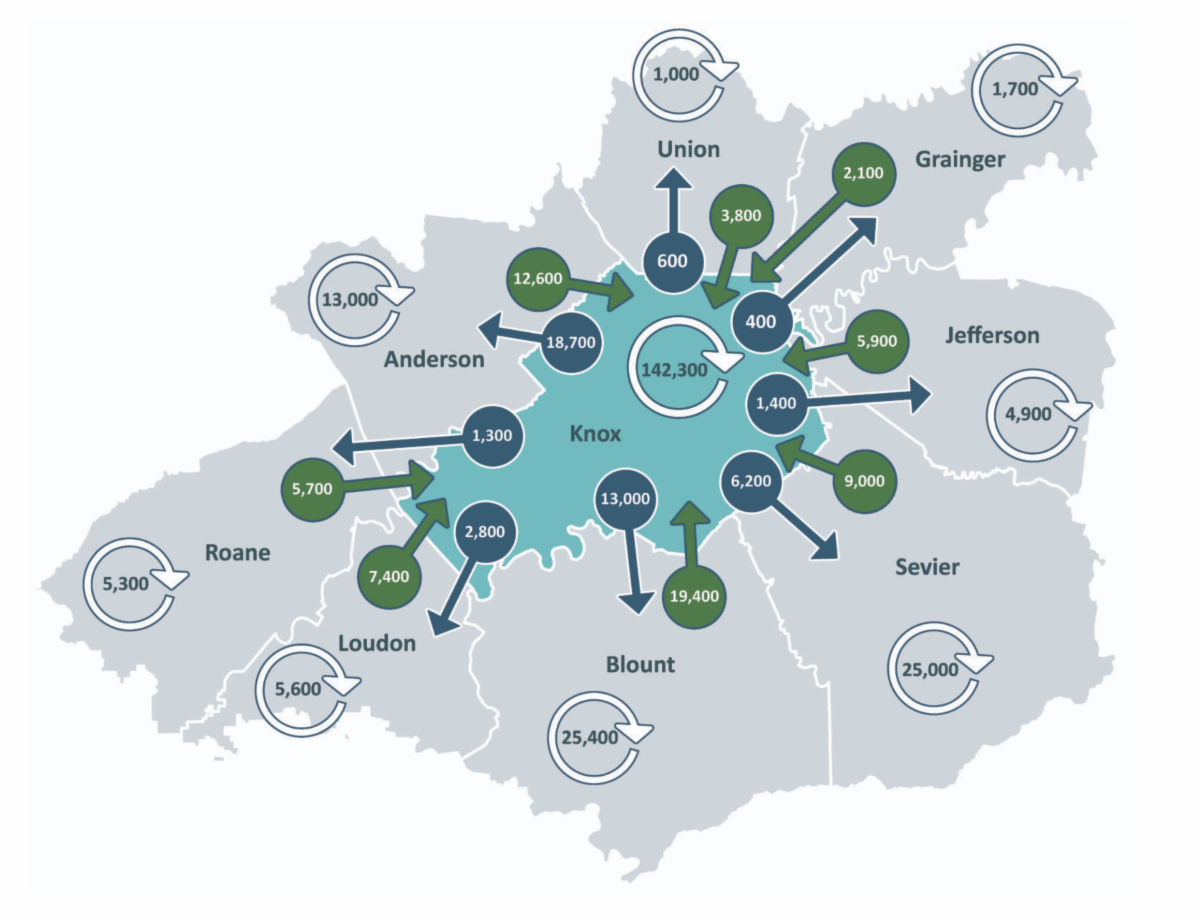
The commuting map accompanying the report shows how connected East Tennessee already is.
For example, it shows approximately 19,400 people traveling from Blount County into Knox County for work, while about 13,000 travel from Knox County into Blount County. It also shows approximately 18,700 people commuting from Knox County into Anderson County.
These figures help explain why housing demand does not stop at a county line.
Someone may work in Oak Ridge and buy a home in West Knoxville. Another person may work in Knoxville but find a home that better fits their budget in a neighboring county.
For buyers relocating to East Tennessee, this makes it helpful to compare both the home and the daily drive. A property that looks close on a map may feel different during the morning commute.
Why More Growth Can Put Pressure on Home Prices
The basic relationship is straightforward: When more people need homes and the number of available homes does not keep up, competition can increase.
That can put pressure on both purchase prices and rents, making it harder for local residents to find housing within their budgets.
The effects can spread, too. If buyers cannot find an affordable option in one community, they may expand their search into the next. That adds demand in places farther from major employment centers.
This does not mean every home will increase in value or sell quickly. Price, condition, location, and the number of competing listings still matter.
Communities Also Need Roads, Utilities, and Services
Building more housing involves more than adding homes.
Growing communities also need roads, water and sewer capacity, schools, emergency services, and other infrastructure. Residents understandably want to know how those needs will be addressed and funded.
The report describes efforts in some counties to limit or pause certain types of development while officials consider those concerns.
A pause may give a community time to review its infrastructure needs. However, it does not necessarily stop people from moving to the region. When housing choices remain limited, the pressure can shift to existing homes, rental properties, and neighboring counties.
The challenge is planning for housing and public services together.
What Is Workforce Housing?
The report also discusses state efforts to support workforce housing.
In plain language, workforce housing means homes that working households can reasonably afford to buy or rent. Think about the people communities depend on every day, including teachers, healthcare workers, first responders, and employees of local businesses.
The goal is to give more people the opportunity to live within a reasonable distance of their jobs.
The update describes housing assessments to help participating counties understand their needs, along with a state pilot program intended to help finance the construction and renovation of workforce housing.
These efforts are part of a broader conversation about how to accommodate growth while keeping East Tennessee accessible to the people who already live and work here.
What Does This Mean for Homebuyers?
If you are considering buying a home in Knoxville or the surrounding area, it helps to look beyond the listing photos.
Consider:
- Your commute: Compare travel times during the hours you would actually drive.
- Your full monthly budget: Include taxes, insurance, HOA fees, and transportation costs.
- Nearby development: Ask about planned projects and verify their status.
- Your long-term needs: Choose a home that fits your life, rather than relying on predictions about future growth.
An announced project can be worth watching, but it should be one part of your decision.
What Does This Mean for Sellers?
New jobs and relocation activity may introduce more buyers to the region, but broad growth does not guarantee a particular result for your home.
Your pricing and marketing strategy should still reflect recent comparable sales, current competition, property condition, and activity in your specific price range.
Understanding where potential buyers work and what they need can also help shape how your home is presented.
Planning for East Tennessee’s Next Chapter
East Tennessee’s communities share employers, roads, and housing demand. That makes regional cooperation important as local leaders consider how to accommodate future growth.
For residents, the goal is practical: more housing choices, manageable commutes, and infrastructure that can support the people who live here.
Thinking about buying, selling, or relocating to Knoxville or the surrounding East Tennessee area? We would love to help you compare communities, understand your options, and find the right fit for your next move.
Source: Housing and economic development commentary supplied from East Tennessee REALTORS®, with an accompanying regional commuting map. Proposed projects, job estimates, funding programs, and development policies may change.